Optional callout banner for highlighted news or events

Learn More
Contact Us

8 Must-Haves When Choosing a Pharma CDMO Partner for Complex Drug Development

What is a CDMO’s Role in Driving Complex Drug Development Success?

And How to Make the Right Choice

A contract development and manufacturing organization (CDMO) should be more than a vendor. The right pharma CDMO has your back from early R&D to commercialization, helping you anticipate and mitigate risks, navigate regulatory challenges, and hit key milestones on time.

Choosing the right CDMO partner for your program is especially important for complex drug development, where the demands are higher and the risks greater. More than ever, success requires deep scientific expertise, specialized facilities, and an agile, experienced team.

But with so many options in the market and so much riding on the decision, what really matters when choosing a CDMO? Read on to find out what you should be asking—and what should raise alarm bells.

1. Technical Capabilities That Match Your Program

The foundation of any successful pharma CDMO partnership is whether they can actually do what your program requires. If your drug is complex, you can’t afford to hand it off to a CDMO that treats it like a standard project; you need a dedicated, highly trained team with deep scientific knowledge, proven experience with similar projects, and facilities that can handle your molecule’s technical demands.

What to ask:

  • Have you worked with molecules or dosage forms similar to mine?
  • Can you provide examples of past successes with complex formulations or scale-up?
  • Do you have the specialized facilities or equipment I need (e.g., OEB4/OEB5 isolators and negative pressure environments for HPAPI development)?
  • Are you experienced with enabling technologies such as self-emulsifying drug delivery systems (SEDDS), nano-milling, multilayer tablets, or controlled-release formulations?

Green Lights

  • Proven track record with niche or complex projects like yours
  • Specialized facilities and technologies, including containment suites and single-use equipment
  • Clear examples of solving tough technical challenges, from tailored analytical solutions to overcoming scale-up hurdles

Red Flags

  • Claims of specialized expertise without evidence
  • Vague or evasive answers about the availability or qualification of specialized facilities
  • No clear, documented process for ensuring manufacturability at scale

2. Expert Consultancy From Development to Commercialization

What to ask:

  • Do you have the capacity to support my project from early development to commercial manufacturing, including clinical trial material manufacturing, product labeling, and commercial packaging?
  • How do you ensure smooth knowledge transfer between your own teams as a project advances?
  • How many projects have you successfully scaled from development to commercial production?
  • Do you outsource any part of the development or manufacturing process, or is everything handled in-house?

Green Lights

  • Capabilities and capacity are sufficient for full-service support
  • Proven track record of advancing complex programs like HPAPIs and long-acting injectables
  • In-house experts and robust systems to ensure knowledge transfer and quality at every stage

Red Flags

  • Lacks senior subject-matter experts who can advise on formulation, scale-up, or regulatory strategy
  • Limited evidence of successfully scaling niche or high-risk programs
  • Relies heavily on outsourcing for specialized activities
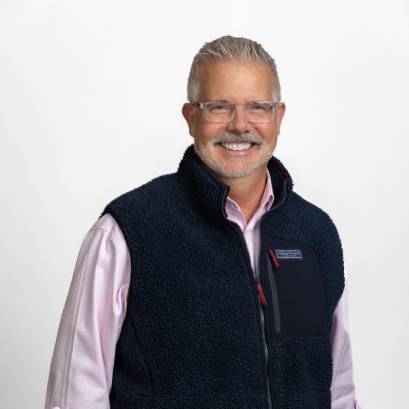
“Unknowns are part of the development process, so flexibility is critical. We work closely with our clients, brainstorming to figure out the best solutions and doing what it takes to keep their program on track.”
John Fowler, President & CEO

Pii, a Jabil Company

3. Flexibility to Adapt as You Scale

What you need from a CDMO partner evolves as your project advances, and for complex programs, it’s not always a linear process. Flexibility means they can adjust when requirements shift, whether that’s timelines, batch sizes, or scope. Scalability means they have the expertise and capacity to grow with you, supporting your program smoothly from early development to clinical trials through commercial production.

What to ask:

Green Lights

  • Demonstrated ability to scale projects smoothly from R&D to commercial supply
  • Clear internal knowledge transfer process to keep projects moving during scope changes
  • Visibility into current and future capacity, including contingency planning for high-demand periods

Red Flags

  • Cannot provide examples of scaling a program through multiple stages
  • No defined process for handling scope changes or tech transfer internally
  • Inflexible batch-size requirements, forcing small or specialty programs into inefficient production models
4. Regulatory Expertise and Recent Successes

What to ask:

  • What is your FDA/EMA inspection history over the last five years?
  • How do you approach corrective and preventive action (CAPA) and continuous improvement?
  • How do you handle unexpected changes in regulatory requirements—do you provide contingency plans?
  • Do you have experience supporting accelerated pathways (e.g., orphan, breakthrough, regenerative medicine advanced therapy (RMAT), or fast track designations)?

Green Lights

  • A clean bill of health: Recent FDA/EMA inspections with positive outcomes and no critical findings
  • Robust quality management systems QMS with CAPA and continuous improvement embedded
  • Proven experience in preparing submission and registration batches for complex programs (e.g., orphan drugs or combination products)

Red Flags

  • History of repeat compliance issues or unresolved inspection findings
  • No clear experience with expedited or global regulatory pathways, leaving niche programs at risk
  • Overreliance on consultants instead of in-house regulatory expertise
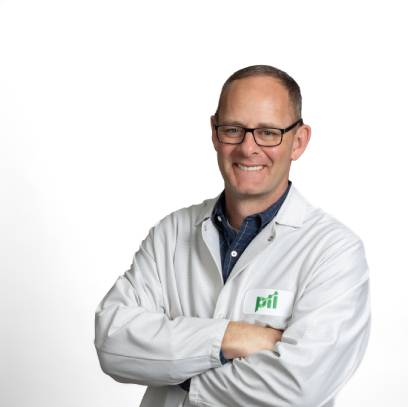
“Regulatory bodies provide general guidance, but each recommendation carries a specific intent. Working with companies that understand this intent and have the experience to act on it is really important.”
Travis Webb, Chief Scientific Officer

Pii, a Jabil Company

5. Proactive Risk Management

What to ask:

Green Lights

  • Describes a structured, proactive risk management framework covering supply, regulatory, and technical risks
  • Transparent in sharing risk assessments and mitigation plans
  • References highlight strong problem-solving and crisis management

Red Flags

  • Relies on reactive fixes rather than anticipating and proactively handling challenges
  • Supply chain is heavily dependent on single sources with no validated backups
  • Provides little visibility into how risks are tracked, reported, or escalated

6. On-Time Delivery of Critical Milestones

When it comes to drug development, time is money, so wasting it is not an option. And for many small and mid-sized pharma companies, meeting timelines is also vital to unlocking investor confidence and funding for the next phase. The right CDMO partner has the capacity, processes, and project management discipline to deliver on time and in full.

What to ask:

Green Lights

  • Strong track record of on-time, in-full delivery, including accelerated or small-batch programs
  • Transparent about current capacity and realistic timelines
  • Uses structured project management tools to monitor progress and mitigate delays

Red Flags

  • Prioritizes larger clients, leaving niche or smaller programs vulnerable to delays
  • Lacks formal project management systems or clear accountability
  • History of delays or missed milestones with no corrective actions taken

7. Balancing Cost With True Value

What to ask:

Green Lights

  • Transparent about how pricing may evolve, including for change orders
  • Phase-appropriate approach to avoid costly over-engineering for early-stage programs
  • Demonstrates cost optimization strategies for specialty or accelerated programs while maintaining quality

Red Flags

  • Provides vague or evasive answers about how costs evolve over time
  • Promotes “lowest cost” as their differentiator without addressing quality
  • Lacks transparency in handling change orders, leading to unexpected budget creep

8. Candid Communication

Complex drug development is rarely a straight line, so you need a partner who keeps you in the loop—no sugarcoating, no surprises. Choosing a CDMO partner that thinks like a vendor adds complexity. Choosing one that takes ownership creates an extension of your team: responsive, collaborative, and transparent about both progress and challenges.

What to ask:

Green Lights

  • Clear, consistent communication channels with an agreed-upon cadence of updates
  • Direct access to project leads, technical experts, and senior leadership
  • References highlight a culture of transparency, collaboration, and responsiveness

Red Flags

  • Overpromising or sugarcoating updates instead of being candid about risks
  • High staff turnover causing loss of continuity and knowledge
  • Limited access to technical experts, forcing all communication through account managers
Choosing the right CDMO partner can mean the difference between stalled progress and a smooth path to patients. This framework is here to help you spot the green lights, avoid the red flags, and choose a pharma CDMO that keeps your complex program moving with confidence.

Skip the red flags. Choose the right fit. See how Pii measures up.

Contact Us

ABOUT Pii

Pharmaceutics International, Inc. (Pii), A Jabil Company, is a US-based contract development and manufacturing organization (CDMO) located in Hunt Valley, Maryland. The experienced scientists, engineers, and staff at Pii pride themselves on adroitly employing a phase appropriate method of drug development for the prudent use of their customer’s resources as they solve challenging problems. In addition to offering end-to-end development services, Pii manufactures a variety of dosage forms to include complex parenteral drugs and has a wealth of analytical testing capabilities. Its Hunt Valley campus has four aseptic suites with lyophilization capabilities. Our talented professionals stand ready to help!

Like what you read? Share with your network:

crossmenu